Metabolic Pathways of Fructose and Glucose
February 2026
Understanding Sugar Metabolism
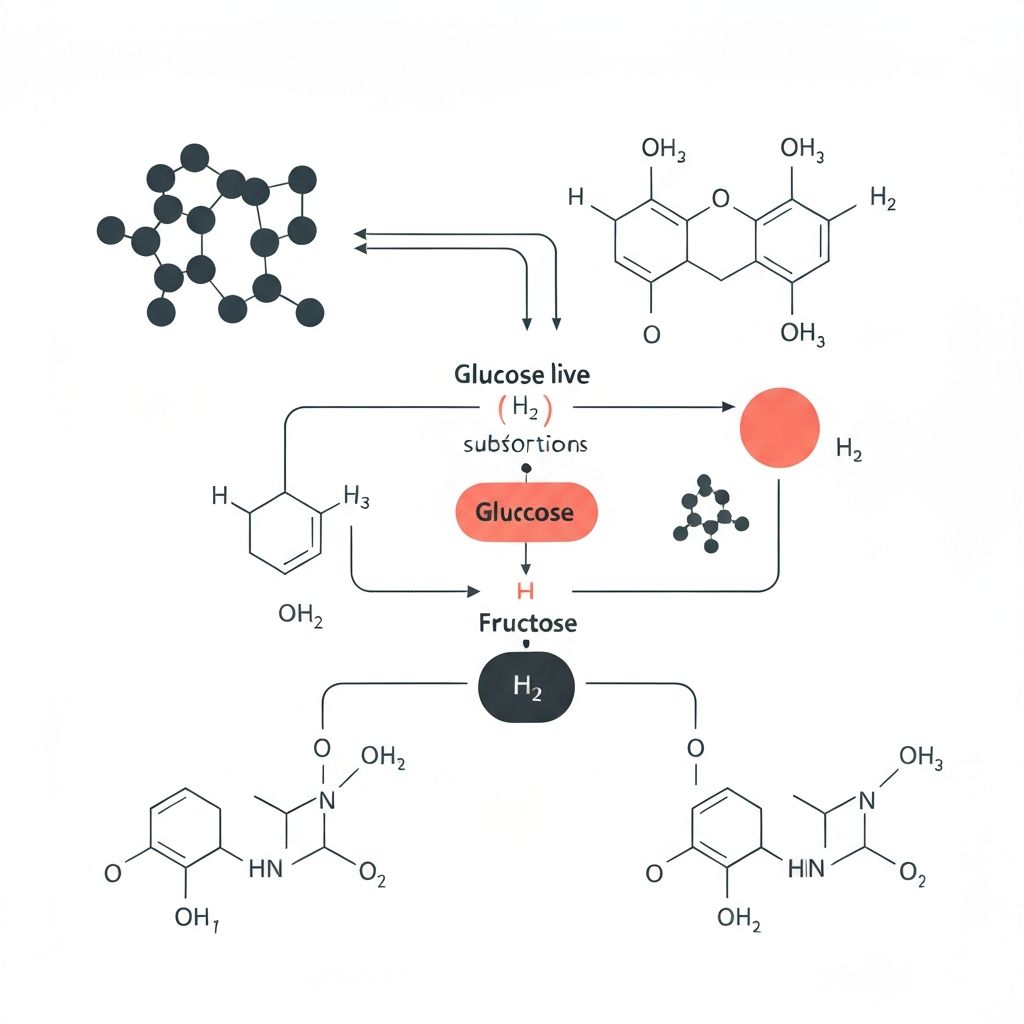
Glucose and fructose, both simple sugars found in dietary sources, follow distinct metabolic pathways once they enter the body. Understanding these pathways is central to nutritional biochemistry. Glucose, a hexose sugar, is processed through a pathway that begins immediately upon intestinal absorption. When glucose enters the bloodstream, it triggers a cascade of physiological responses including insulin secretion from the pancreatic beta cells. This insulin signal orchestrates the body's shift from a fasted to a fed metabolic state.
Fructose, by contrast, is metabolized almost exclusively in the liver through a process called fructolysis. Unlike glucose, fructose does not directly stimulate insulin secretion, nor does it trigger the immediate satiety signals associated with glucose absorption. The liver processes fructose rapidly, converting it to glucose, glycogen, or fatty acids depending on the metabolic state and energy status of the organism. This fundamental difference in metabolic handling reflects the distinct enzymatic pathways these two sugars follow.
Glucose Utilization and Energy Production
Glucose is the body's primary fuel. Once absorbed from the small intestine, it enters the bloodstream and is transported to cells throughout the body. Each cell possesses glucose transporters that facilitate glucose entry into the cell. Within the cell, glucose undergoes glycolysis, a metabolic pathway that breaks down the sugar molecule into pyruvate, generating ATP (adenosine triphosphate), the energy currency of the cell. In the presence of oxygen, pyruvate enters the mitochondria where it is further metabolized through the Krebs cycle and oxidative phosphorylation, yielding substantial energy production.
The pancreatic hormone insulin plays a central regulatory role in glucose metabolism. When glucose concentration rises in the blood—as occurs after a meal containing carbohydrates—insulin is secreted. Insulin facilitates the uptake of glucose by muscle and fat cells, promotes the storage of glucose as glycogen in the liver and muscles, and signals the body that energy is available. This fed state contrasts with the fasted state, when insulin levels decline and other hormones (glucagon, epinephrine, cortisol) coordinate the mobilization of stored energy.
Fructose Metabolism in the Liver
Fructose enters the liver through specific transporters and is phosphorylated by the enzyme fructokinase directly to fructose-1-phosphate. This process bypasses some of the regulatory mechanisms that control glucose metabolism, allowing fructose to be rapidly metabolized without first triggering insulin secretion. The liver can then convert fructose-1-phosphate to glucose (via gluconeogenesis), to glycogen (for storage), or to acetyl-CoA (which enters fat synthesis pathways).
The rapid hepatic metabolism of fructose means that the liver bears the primary metabolic burden of fructose processing. In states of energy excess, the liver's capacity to store glucose as glycogen becomes saturated, and excess carbohydrate (whether from fructose or glucose) can be converted to fat through de novo lipogenesis. However, this pathway activates whether energy is in surplus or not—it is a constitutive metabolic process. Whether net fat accumulation occurs depends on the overall energy balance of the organism, not on fructose metabolism in isolation.
De Novo Lipogenesis and Fat Synthesis
De novo lipogenesis (DNL) is the process by which carbohydrates are converted into fatty acids and stored as triglycerides in adipose tissue. This pathway is biochemically real and occurs to varying degrees in response to excess carbohydrate intake. Research has documented that both glucose and fructose can be substrates for DNL, though the efficiency and regulatory control differ between the two. When carbohydrate intake exceeds storage capacity and energy expenditure is low relative to intake, DNL becomes a mechanism through which excess energy is converted to stored fat.
However, DNL represents a mechanism of energy storage, not an independent pathway that determines fat accumulation. The fundamental equation governing fat storage is energy balance: when total energy intake exceeds total energy expenditure, the body stores the excess as adipose tissue. De novo lipogenesis is one mechanism through which this storage occurs, particularly when dietary carbohydrates are abundant and fat is scarce. The existence of this pathway does not override the principle that fat accumulation depends on energy surplus.
Glycogen Storage and Satiety Signals
After a meal, glucose not immediately used for energy or converted to fat is stored as glycogen in the liver and skeletal muscles. Glycogen serves as a rapid-access energy reserve, available during periods when food intake is low and energy is needed. The liver can store approximately 100-120 grams of glycogen, while muscles store considerably more (300-400 grams total). These glycogen stores are depleted during fasting and intense physical activity, triggering signals for food intake and energy mobilization.
Glucose absorption also triggers satiety signals via multiple mechanisms. Intestinal glucose triggers the release of incretins (hormones like GLP-1) that enhance insulin secretion and promote satiety. Glucose-induced insulin secretion itself signals the fed state to the brain. Fructose, processed primarily in the liver, may bypass some of these immediate satiety signals, potentially leading to less robust appetite suppression compared to glucose. These differences in satiety signaling are documented in nutritional physiology but represent secondary metabolic effects compared to the primary role of total energy intake in energy balance.
Educational Notice: This website provides general educational information only. The content is not intended as, and should not be interpreted as, personalised dietary or health advice. Relationships between dietary components and body composition are complex and vary between individuals. For personal nutrition decisions, consult qualified healthcare or nutrition professionals.