Energy Surplus and Fat Storage Mechanisms
February 2026
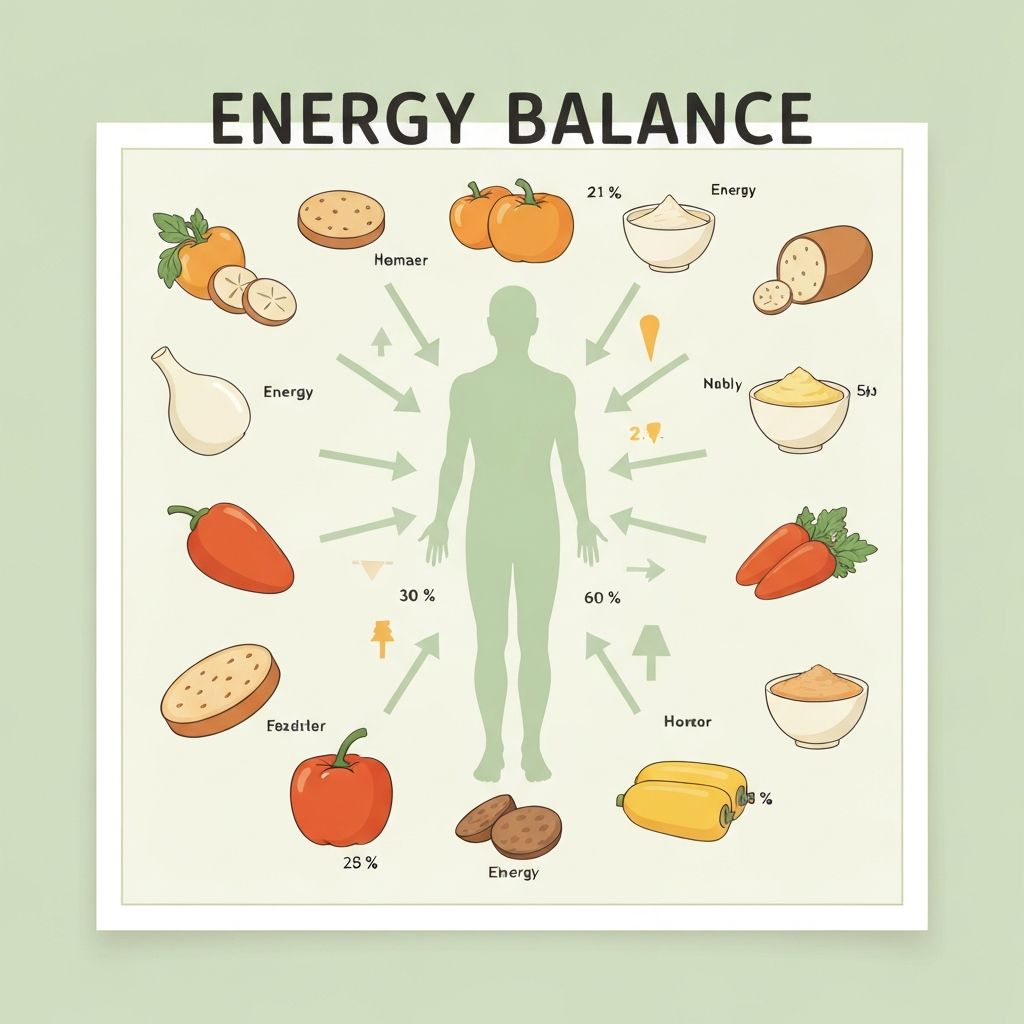
The Fundamental Principle of Energy Balance
The storage of body fat is fundamentally governed by energy balance—the relationship between energy intake and energy expenditure. When total energy consumed exceeds total energy expended over time, the body stores the excess energy as adipose tissue (body fat). Conversely, when energy expenditure exceeds energy intake, the body mobilizes stored fat to meet energy demands. This relationship is governed by the laws of thermodynamics applied to human physiology, making it a foundational principle in nutritional science.
Total daily energy expenditure consists of three primary components: basal metabolic rate (BMR, the energy required for basic life processes), the thermic effect of food (energy required to digest and process nutrients), and activity energy expenditure (energy expended during movement and exercise). Total energy intake is the sum of all nutrients consumed. When intake exceeds expenditure, a caloric surplus exists; when expenditure exceeds intake, a deficit exists. The direction and magnitude of fat change corresponds to the magnitude and direction of this energy balance.
Macronutrient Sources in Energy Balance
All macronutrients contribute to total energy intake. Carbohydrates (including sugars) provide 4 calories per gram, protein provides 4 calories per gram, and fat provides 9 calories per gram. From a thermodynamic perspective, a calorie of energy from any source—whether from sugar, starch, protein, or fat—represents the same unit of energy. The body does not preferentially store energy from sugar over energy from other sources when considering only the energy content. The fundamental driver of fat storage is whether total energy is in surplus relative to expenditure.
However, different macronutrients may have secondary effects on energy balance. Protein has a higher thermic effect than carbohydrates or fat, meaning more energy is required to digest and process protein, creating a modest metabolic advantage. Fat, being calorically dense and potentially more palatable, may facilitate overconsumption more readily than bulkier carbohydrates. Carbohydrates vary in their satiety effect depending on fiber content, food structure, and individual factors. These secondary effects can influence whether surplus energy occurs, but they do not change the fundamental equation that fat storage requires overall energy surplus.
Metabolic Pathways and De Novo Lipogenesis
When total energy is in surplus, multiple metabolic pathways can store that excess as body fat. De novo lipogenesis (DNL), the synthesis of new fatty acids from carbohydrates, represents one such pathway. When glycogen stores are full and carbohydrate intake exceeds immediate energy needs, the body converts excess carbohydrate to fat. This occurs primarily in the liver and adipose tissue. Research has documented that both glucose and fructose can serve as substrates for DNL, though the efficiency and regulation differ slightly between them.
However, de novo lipogenesis is not the only storage pathway, nor is it the primary one. Direct dietary fat intake is absorbed and stored in adipose tissue with minimal metabolic cost. The body also partitions dietary carbohydrates toward glycogen storage and immediate energy use before engaging DNL. The development of body fat in the setting of energy surplus occurs through multiple mechanisms, with direct fat storage and carbohydrate oxidation (sparing fat for storage) being quantitatively more important than DNL in most situations. The existence of DNL as a metabolic process does not mean it is the mechanism determining fat storage.
Individual Metabolic Variation
While energy balance remains the fundamental principle governing fat storage, the precise relationship between energy surplus and fat accumulation shows individual variation. Factors including baseline metabolic rate, hormonal status (thyroid function, cortisol, growth hormone), age, sex, genetics, and previous weight history all influence the efficiency of energy storage and mobilization. Some individuals show greater weight gain per unit of energy surplus, while others show less. This variation reflects real physiological differences in how efficiently individuals store energy and how their bodies regulate energy balance.
Additionally, weight changes involve both fat and lean mass (muscle and bone). A given energy surplus may increase fat mass in one individual while proportionally increasing lean mass in another, depending on resistance training, genetics, and nutritional factors. An energy deficit similarly mobilizes both fat and lean mass, with preservation of lean mass being a complex function of protein intake, exercise, and individual factors. The visible or measured weight changes reflect total body composition changes, which respond to energy balance but with individual variation in the composition of that weight change.
Separating Energy Balance from Specific Nutrients
The principle of energy balance does not preclude secondary metabolic effects of specific nutrients. Research has documented that different foods may have different effects on satiety, hunger signaling, metabolic rate, and the likelihood of overconsumption. These secondary effects could theoretically influence energy balance by making it easier or harder to achieve energy surplus or deficit. However, these secondary effects operate by influencing energy balance—they either increase or decrease the likelihood of total energy surplus or deficit. They do not override the fundamental principle that fat storage requires overall energy surplus.
Understanding that energy balance is the primary driver of fat storage does not mean that all foods are equivalent for health, satiety, nutrient density, or palatability. It means that whether the body stores energy as fat depends fundamentally on whether energy intake exceeds expenditure. Secondary effects of specific nutrients influence whether that surplus occurs, but by definition through their effects on total energy balance rather than through alternative storage mechanisms independent of energy balance.
Educational Notice: This website provides general educational information only. The content is not intended as, and should not be interpreted as, personalised dietary or health advice. Relationships between dietary components and body composition are complex and vary between individuals. For personal nutrition decisions, consult qualified healthcare or nutrition professionals.